

It may be difficult to find many of our family members, colleagues, and neighbors who get excited about April 15. Very few of us enjoy the process of filing out our tax forms. And we almost never pause to consider the connection between the taxes we pay, and all the great work government does for us and our communities.
But our taxes pay for the tools we use to create thriving communities. They fund our shared priorities: public schools that give every kid a fair chance, infrastructure that keeps us safe, and services that support families and working people. Further, what’s good for people is good for the economy. Lowering the cost of child care and health care, providing young people with ample opportunities to learn and create, and making sure people can afford to purchase the goods and services they need — that’s what makes the economy strong.
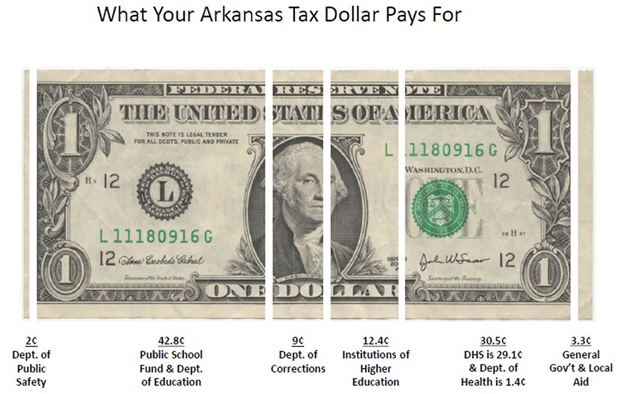
However, this is an uncertain time for our tax and budget systems in the state. H.R. 1, the federal legislation signed into law last summer (the One Big Beautiful Bill Act), asks the state to pay more than ever to fund health care and food assistance for Arkansans. President Trump has indicated he would like states to cover the costs of such important services as disaster relief, child care, and affordable housing assistance. The war in Iran has sent the inflation rate surging to 3.3%, the largest monthly increase since the post-pandemic inflation crisis. The number of unemployed in Arkansas rose more than 17%, and the state’s jobless rate rose to 4.4%, a level not seen since May 2021. State unemployment now exceeds that of the United States overall.
As for the state budget, new commitments to Education Freedom Accounts (the publicly funded vouchers for private and home schooling) and increases in state employee pay consume over 90% of the governor’s requested budget increase. The Freedom Accounts will cost up to $379 million or more this coming year, and the price tag will continue to skyrocket if not reigned in by legislators. The state must now budget $18 million in Supplemental Nutrition Assistance Program (SNAP) administrative cost share just for the next state fiscal year alone.
With this “perfect storm” of fiscal challenges and economic uncertainties, it is hard to understand the governor’s call for a special session this May to cut income taxes yet again, a plan that legislative leaders support. After all, income taxes generate about half of the general revenue in the state. It’s the antithesis of good common sense to give away revenue while facing the need to invest in Arkansans. A stark warning comes from other states that have done just that; many states that have made such decisions find themselves unable to balance their budgets. They are now either raising sales and property taxes or cutting important programs that support families (or both).
It is difficult to find an interesting and even exciting read about income tax. But Vanessa Williamson’s The Price of Democracy: The Revolutionary Power of Taxation in American History, is just that. In the book, Dr. Williamson makes a convincing argument that income taxes are freeing. For example, Social Security increased freedom for older Americans; our seniors no longer worry about working until they die, as they once did. Public schools increase freedom by providing opportunities to every child in America. What’s more, there is a strong correlation between income taxes and democracy: the fairer an income tax system, the stronger the democracy.
Now is a time to empower all Arkansas families, as we cherish freedom and democracy. Investments in the people of Arkansas, not income tax cuts.