
Positive, encouraging interactions between adults and children are key to strong early learning, both at home and in the classroom. Children who receive high-quality early childhood education (ECE) are more ready for school, more likely to attend college, and tend to have better outcomes as adults.
Even before the pandemic, the early childhood workforce faced big challenges. Low pay and underfunding have made it hard to hire and keep staff. Many workers reported high stress, symptoms of depression, and trouble keeping programs running safely. COVID relief funds helped for a short time, but more long-term support is needed to strengthen the workforce.
Early Childhood Education Workforce
Education Level
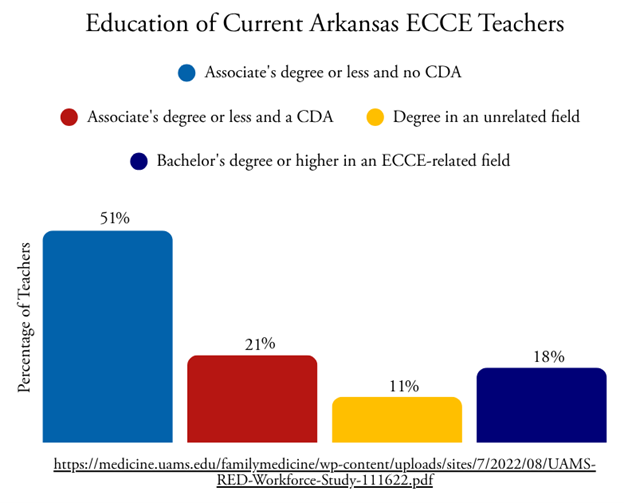
The quality of care often depends on the training and support that teachers receive. However, only about 40% of early childhood teachers in Arkansas have an education in early childhood care and education (ECCE). This includes those with a Child Development Associate (CDA) credential or a degree in an ECCE-related field.
Wages by Education Level
Teachers with more education and training often earn slightly higher pay, but wages remain low across the board. According to recent data:
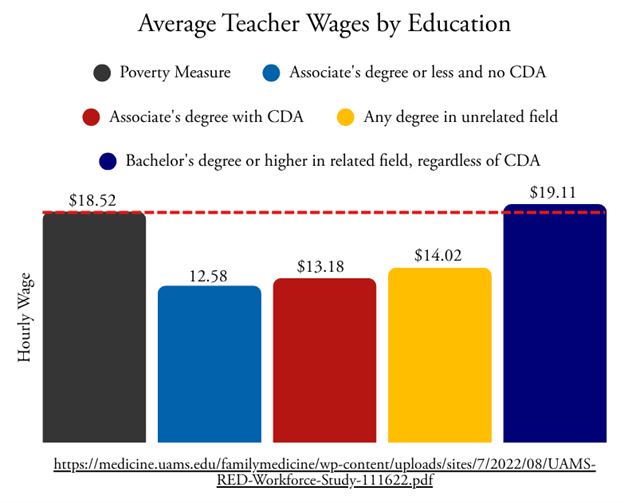
These wages make it hard to keep qualified teachers in the field. Even for teachers with bachelor’s degree or higher, the pay is still less than many other professions with similar education levels. Investing in better pay and training can improve care for young children and help centers keep experienced staff.
Build the Birth to Age 3 System
The first three years of life are the most important for a child’s brain and body. But finding quality care for infants and toddlers is very hard. Across Arkansas, only 1 in 10 working parents can find licensed care for their baby or toddler. This often leads parents to delay going back to work until their child starts Pre-K.
Expanding care for children from birth to age 3 would help families now and give young children a stronger start in life.
Health and Education Work Together
Helping children get regular developmental check-ups and support services can improve both learning and health. Screening for infants and toddler mental health are important so families can support their child’s emotions early on.
Medicaid’s Early and Periodic Screening, Diagnostic and Treatment (EPSDT) program gives children regular health check-ups. But Arkansas Medicaid only requires five out of seven recommended visits for babies from birth to 9 months, based on national health guidelines. Making sure all children get the full set of visits would help with early learning and brain development.