
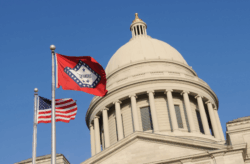
2026 Special Session Keys Up to Further Starve SNAP and Other Programs
The Supplemental Nutrition Assistance Program (SNAP) suffered a significant loss last week that will likely destabilize the program in our state. What’s more, an attempt to cut state income taxes this week will only further jeopardize the viability of SNAP in Arkansas.
As a result of the One Big Beautiful Bill Act (H.R. 1), states will soon see a reduction in federal SNAP funding. Consequently, states must absorb these federal cost shifts to continue operating this critical food assistance program that helps families, veterans, and people with disabilities purchase groceries. The administrative cost shift is the first H.R. 1 cost shift provision for SNAP. It will start in October 2026 when states become responsible for 75% of SNAP administrative costs. Previously, state and federal governments split SNAP administrative costs 50/50.
For Arkansas, this means that in the forthcoming state fiscal year beginning on July 1, the state must come up with $18 million simply to keep the SNAP running at status quo. A fully funded SNAP program is needed not only to ensure low-income families can make ends meet but also to sustain the Arkansas Department of Human Services’ (DHS) efforts to reduce its SNAP payment error rate (calculated based on administrative inaccuracies when eligible families receive an over- or underpayment of SNAP benefits). If Arkansas is unable to reduce its SNAP payment error rate to below 6%, then the state will also have to pay a percentage of SNAP benefits beginning in October 2027, as enacted under H.R. 1.
State lawmakers had the opportunity during the 2026 fiscal session to be proactive and appropriate the $18 million to ensure that SNAP in Arkansas has the staffing, training, technology, and other resources to continue issuing benefits and intensify quality control efforts related to SNAP payment error rates. Unfortunately, the 2026 Arkansas fiscal session ended on Thursday with a state budget that left DHS essentially flat funded. In other words, state lawmakers did not appropriate the $18 million needed to absorb the impending SNAP administrative cost shift that hits later this calendar year, despite Arkansas’s ranking of number one in food insecurity in the country.
Meanwhile, at least four other southern states have recognized the importance of absorbing the SNAP administrative cost shifts. To date, Alabama, Georgia, Kentucky, and West Virgina have appropriated at least some percentage, if not all, of the expected SNAP administrative costs. At least three other bordering states (Missouri, Oklahoma, and Tennessee) are on a similar path to committing at least some level of state funding for SNAP administration in their respective legislative sessions.
Back in Arkansas, the consensus seems to be that DHS will have to make up the $18 million hole through various operational efficiencies. While streamlining operations should always be a goal, it is difficult to imagine – particularly in state government where budgets and staff are already tight – that any amount of changes in administrative activities will result in $18 million worth of savings.
While the impact won’t be felt immediately on October 1, 2026, operating with an $18 million shortfall is not sustainable. Over the next year, it is likely the DHS will have to make crucial operational decisions as it balances running the program and continuing new initiatives aimed at lowering the SNAP payment error rate. But fewer agency resources will likely only increase our SNAP payment error rate. And a higher SNAP payment error rate will drive up the SNAP benefit amount for which Arkansas will be responsible when that H.R. 1 cost shift hits in October 2027.
And if Arkansas chooses not to fund its percentage of SNAP benefit costs in October 2027 if the state does not realize a SNAP payment error rate below 6%? The state may be forced to:
- reduce the amount of food assistance for low-income families currently receiving SNAP (when the average daily SNAP benefit per household member in Arkansas is roughly $6.30);
- restrict who is eligible to participate in the program (when Arkansas already has some of the most restrictive program eligibility rules in the nation); or,
- worst case scenario: end SNAP altogether.
With so many Arkansans already struggling with hunger, these are not risks that our state can take. SNAP helps more than 225,000 Arkansans put food on the table. But SNAP does more than keep hunger at bay. It reduces childhood poverty, helps children excel in the classroom, lowers hospital visits, supports farmers and 2,700 local SNAP retailers in Arkansas, and stimulates our local economy. Every SNAP dollar generates up to $1.80 in local economic activity. It makes good economic sense to invest in SNAP.
Last week, Arkansas missed its first opportunity to invest in SNAP and make a plan to absorb H.R. 1 cost shifts. But we cannot stop fighting. In fact, the next fight for SNAP and many other vital community programs begins this week with another round of proposed income tax cuts during the First Extraordinary Session of 2026. The state Department of Finance and Administration estimates that the proposed 0.2% income tax cut would decrease the state general revenues by a little over $191 million in the next fiscal year alone. Roughly 10% of that amount would be enough to fund the SNAP administrative cost shift for that same time period.
When we already have significant budget gaps in government programs like SNAP, we cannot afford to give up more state revenue. Contact your state legislators and tell them to vote no on the tax cut proposal. We must ensure a strong state budget so that SNAP and other programs that create a bridge to a brighter future for children and families in Arkansas continue to operate at full capacity.