
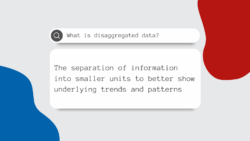
The KIDS COUNT Data Book tracks children’s well-being across four domains and 16 indicators. The topline numbers are not encouraging — overall, Arkansas ranks 45th in child well-being. However, the disaggregated data underlying each of those indicators by race shows consistent lags for Black, Latino, and other multiracial children in Arkansas over time as compared to their White counterparts in several indicators, including poverty, health outcomes, and educational achievements.
To be clear, not all indicators show Black, Latino, or other non-White kids doing worse than White children. In addition, it is important to understand that children who are members of Black, Indigenous, and other People of Color (BIPOC) communities are not doing worse because a particular race or ethnicity is inherently tied to worse outcomes. Rather, persistent and substantial gender, racial, and ethnic gaps have impacted their outcomes. These gaps have persisted for decades and make it clear that policymakers must provide targeted and sustained investments to address inequities.
A Deeper Dive into Poverty Data
Although the KIDS COUNT Data Book shows that we are doing mildly better in terms of the overall number of children in poverty, we are still at a staggering 21% of children living in poverty in Arkansas, compared to the national child poverty rate of 16%. This means that more than 1 in 5 kids are living in families with incomes below 100% of the U.S. poverty threshold, as defined by the U.S. Census Bureau.
However, when we dig into the disaggregated data, we see that only 15% of White children are living in poverty in our state as compared to 19% for Hispanic or Latino kids, and a staggering 43% of Black children. Racial disparities are even worse when we look at areas of high poverty, meaning where the poverty rates of the total population are 30% or more. Children living in these concentrated poverty areas tend to face multiple hardships, such as limited access to services, higher rates of unemployment, and a greater prevalence of physical and mental health issues. Only 4% of White children are likely to live in high-poverty areas in Arkansas, but Hispanic children are three times as likely (12%), and Black children are seven times as likely (28%) to live in high-poverty areas as their White counterparts.
The Intersectionality of Poverty and Hunger
While the 2025 KIDS COUNT Data Book does not have an indicator that specifically addresses hunger, there are indicators that are interconnected with hunger. For example, the number of children living in poverty in Arkansas (144,000 kids) and living in high-poverty areas in our state (68,000 kids) directly impacts our hunger rates because their families lack sufficient resources to access basic needs like groceries.
Even though there are no KIDS COUNT Data Center indicators specific to hunger, it’s important to look at other data points related to hunger to understand the breadth of this issue in our state and how it correlates with our poverty rates. According to the United States Department of Agriculture (USDA) 2023 data, Arkansas has the highest rate of food insecurity in the nation: 18.9%, compared to 13.5% nationally. Also, for 2023, Feeding America reports that 25% of children, up from 19% in 2021, were food insecure. The USDA defines food insecurity as an economic and social condition of limited or uncertain access to adequate food. That means that in 2023, nearly 570,000 Arkansans — more than 168,000 of whom were children — lacked sufficient food. These numbers are unacceptable.
Unfortunately, we can expect this to worsen as the recently passed federal funding bill, “One Big Beautiful Bill Act” (OBBBA), makes significant and deeply devastating cuts to federal funding for the Supplemental Nutrition Assistance Program (SNAP, previously known as food stamps) and shifts program costs to states. Arkansas would have to significantly adjust its state budget to absorb these new costs.
Hunger and Poverty Result in Negative Outcomes for All Kids, but Black and Brown Children Fare the Worst
For children, poverty and food insecurity have long-term consequences that can start before birth. For example, we know that food insecurity is high among pregnant women in the United States, at a rate of 14%. A lack of nutritious food during pregnancy can cause significant issues for both the mother and the baby, including a higher risk of gestational diabetes, preterm birth, and infants born with a low birth weight. Again, looking at disaggregated data is important because it highlights the disparities in outcomes in our state. For example, in Arkansas, the KIDS COUNT Data Center shows that 12% of babies of two or more races and 16% of Black babies have a low birth weight, compared to only 8% of their White counterparts. This is significant because low birth weight babies may be more likely than others to have certain health conditions later in life like type 2 diabetes, heart disease, and developmental disabilities.
A lack of sufficient nutrition during childhood can also impact educational outcomes. Longitudinal data shows, hunger “affects concentration, memory, mood, and motor skills, all of which a child needs to be able to be successful in school.” We see educational disparities reflected in the Data Center as well. While overall 72% of Arkansas’s fourth graders scored below proficient reading level, 87% of Black and 82% of Hispanic children scored below reading level, compared to only 64% of White students.
What can be done to address the systemic poverty and hunger in Arkansas?
Fortunately, we have existing programs designed to reduce poverty and hunger in our state. For example, the Special Supplemental Program for Women, Infants, and Children (WIC) is for pregnant and post-partum women, infants, and children under age 5. WIC provides free, healthy foods and personalized nutrition education, breastfeeding support, and referrals to other services. Studies show that WIC reduces premature births, decreases low birthweight babies, and reduces fetal and infant deaths while also improving diet quality and access to health care.
However, we have work to do. In calendar year 2022 (the most recent year for which the coverage rate data is available), the USDA reported that Arkansas had an overall WIC coverage rate of 40.4%, as compared to the national rate of 54%. In fact, Arkansas was one of seventeen states that had WIC coverage rates consistently lower than national rates across all categories and age groups. The coverage rate is the percentage of the total eligible population in each participant category (i.e., women, infant, and children) that receives WIC benefits. Coverage rates are useful for understanding how well WIC reaches people who are eligible for the program. This means that almost 60% of the eligible women, infants, and children facing nutritional risk in our state, including those that are facing “dietary deficiencies that impair or endanger health,” are not enrolling in WIC benefits.
Low enrollment in the WIC Program is in part because the program design in our state has many inefficiencies. For example, Arkansas is one of only five “offline states” that do not load benefits remotely every month; instead, families must travel to the office every few months to reload benefits. This is a significant barrier for the many families in our state that lack reliable transportation. However, WIC program officials are striving to further increase accessibility with a plan to transition to an online benefit system by 2026, as well as providing programmatic visits via telehealth. As a result, people will not be required to travel to the local WIC office just to access their benefits.
SNAP is another program intended to address food insecurity and improve overall diet quality for individuals with low incomes. Yet, SNAP — the most successful anti-poverty and anti-hunger program in the United States — is significantly underused in Arkansas. In fact, despite our continued low enrollment and participation rate, according to the Arkansas Department of Human Services (DHS), more than 60,000 lost access to SNAP in Fiscal Year 2023.
What’s more, SNAP has historically supported families through the SNAP-Ed Program. SNAP-Ed is an evidence-based program that teaches families how to maximize their SNAP dollars as well as how to cook healthy meals and incorporate physical activity into their daily lives. Unfortunately, the OBBBA will end the highly important SNAP-Ed funding after September 30, 2025. Eliminating this program means that families will no longer have support to learn about healthier food choices and encourage their long-term well-being. Instead, it will turn SNAP back into a food purchasing program only. This is especially harmful for young families with children who may not have the skills to know how to make their minimal SNAP dollars stretch, especially as food prices continue to rise.
Conclusion
In a state that prides itself on being a world leader in food production and distribution, no child should ever go hungry. Nor should we accept that Arkansas continues to have high poverty and hunger rates. To address these systemic issues that are impacting our kids, we must begin with targeted policies and laws that address the continuing inequities we see in the data that result in the outcome disparities across race and ethnicity we see in disaggregated data.
Policymakers should:
- Ensure all school meals are free. No student should go hungry while at school, and making sure that all school meals, not just breakfast, are free will go a long way toward addressing childhood hunger in Arkansas.
- Consider how to adjust the state budget so that it can absorb the forthcoming SNAP administrative and benefit cost shifts to the state (as a result of the OBBBA) so that SNAP can continue to operate at its current capacity.
- Increase SNAP and WIC outreach to eligible populations who are currently not accessing benefits because of a lack of knowledge, distrust of government, perceived stigma, or barriers to applying online or in the county offices.
- Ensure that services are available in multiple languages, as required under federal law, and that access to interpreters and translators is easy and standardized.
- Expand ARKids eligibility criteria for children and extend postpartum access to pregnancy Medicaid from the current 60 days to 12 months.
- Create and fund an Arkansas Child Tax Credit. It will not only reduce poverty and, in turn, also decrease hunger for families with children while also strengthening Arkansas’s overall economy.
When we consider the issues that the 2025 KIDS COUNT Data Book highlights by digging deeper into the data, it is clear that we must make investments in order to improve outcomes for our state and ensure we take an equitable approach to developing policies that support all children and families. To do anything else would be irresponsible when facing a poverty and hunger crisis among the children of our state.