Public Policies and Programs Proven to Reduce the Rate
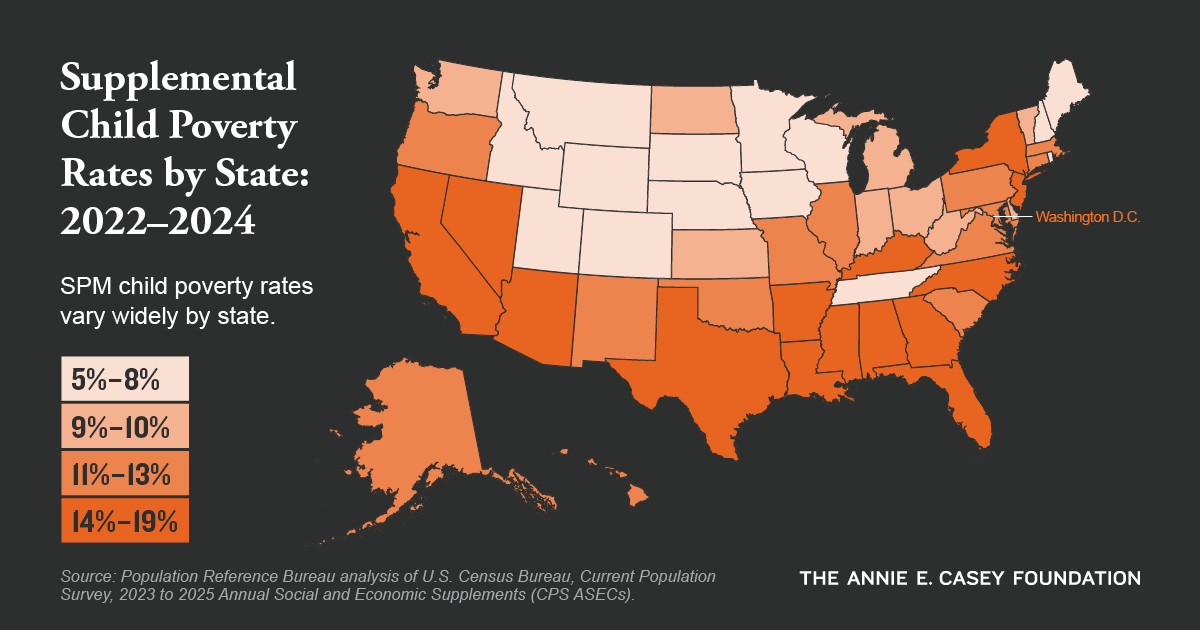
The rate of children living in poverty in Arkansas has surged from 8.9% in 2019-21 to 14.5% in 2022-24. This dramatic increase follows the expiration of pandemic-era economic policies and rising prices that have strained family budgets and is above the national average of 13%. However, a new report from the Annie E. Casey Foundation, Measuring Access to Opportunity in the United States: A 10-Year Update, underscores the profound impact of public policies and programs on reducing child poverty.
This report, which analyzes U.S. Census Bureau figures from the annual Supplemental Poverty Measure, reveals that more than one in eight children in this country now live in poverty, with one in every seven children in Arkansas going without essential needs met. Without government intervention, this rate would be more than double (29.5%) statewide, highlighting the crucial role of public support in alleviating financial hardship for struggling families. Among children living in poverty nationwide, 61%, or 5.9 million, lived with at least one employed parent in 2024.
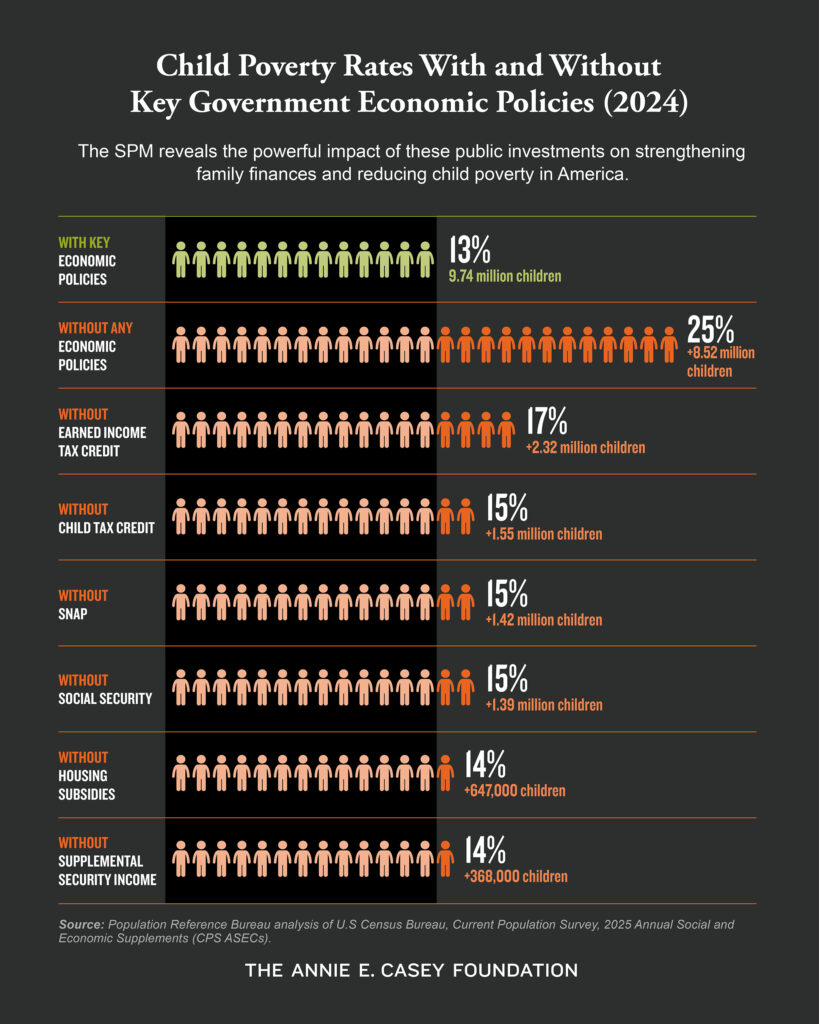
The Supplemental Poverty Measure is a more accurate gauge of families’ economic situations than the official poverty measure’s income threshold of $31,812 for a family of four in 2024. It accounts for essential expenses such as housing, medical and child care; adjusts for rising costs and geographic differences in the cost of living; and measures the effectiveness of vital resources like tax credits, Social Security, Supplemental Security Income, food assistance and housing subsidies.
Arkansas does not have a state-level earned income tax credit or child tax credit. Both of these tax credits have been shown to lift children out of poverty in other states and would do the same here.
“Poverty poses a serious threat to children’s development and long-term well-being, with far-reaching consequences for our economy,” said Leslie Boissiere, vice president of external affairs at the Annie E. Casey Foundation. “The data unequivocally show that public programs directly help our nation’s children. By investing in children’s well-being — through both public policy and employment practices that provide family-sustaining wages — we can enable more children to thrive and contribute as they become adults.
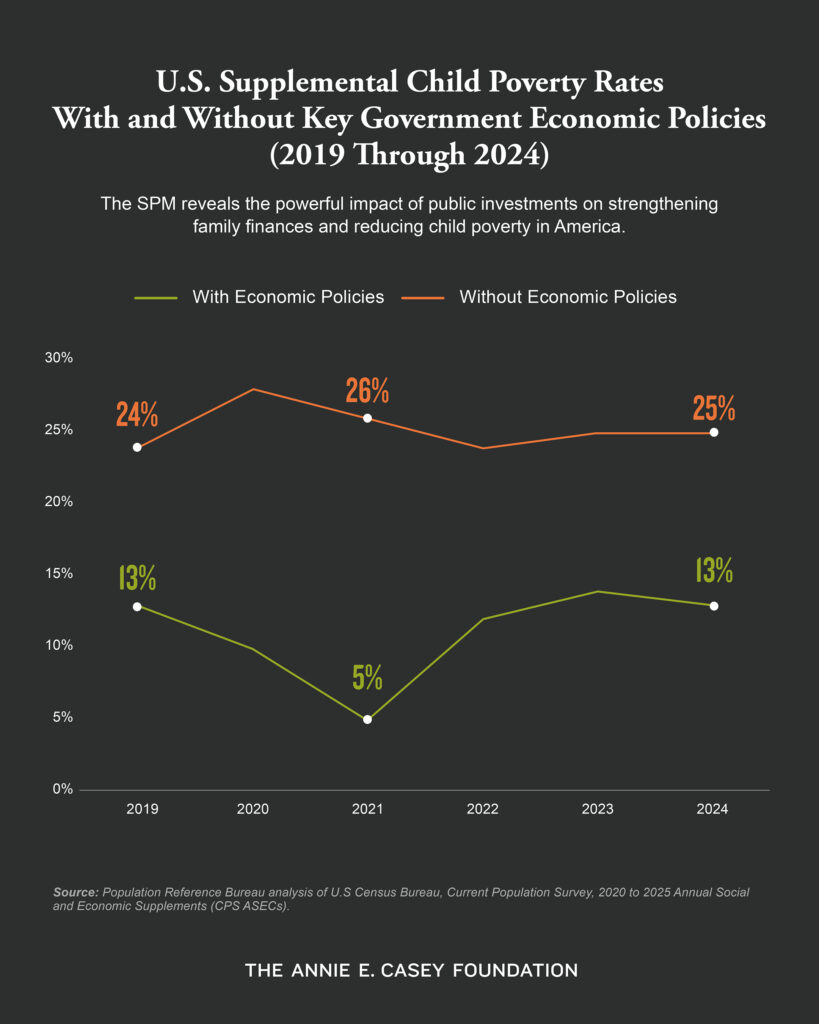
In 2021, 5% of children in the U.S. lived in poverty, an historic low created by enhanced social supports and the one-time expanded Child Tax Credit to support families during the pandemic. These combined government policies and programs lifted more than 15 million children out of poverty in 2021. Between 2021 and 2024, after those enhanced resources expired, the rate of children in poverty rose to pre-pandemic levels of 13% under the Supplemental Poverty Measure. That percentage would be 25% without government interventions to alleviate financial hardship, demonstrating the crucial role of public programs and tax policies in the well-being of children in this country.
Policies and programs to stave off poverty are becoming more of a lifeline for families in the face of rising costs in recent years. As housing, food, child care, and health care costs continue to rise, families find it increasingly difficult to make ends meet despite receiving assistance.

While poverty rose among all children from 2021 to 2024, children of color experienced the steepest increases. Poverty among Black children rose from 8% to 23%, and among Latino children from 8% to 21%. Geographically, the South has the highest child poverty rates and saw the greatest increase, up 5% between 2019–21 and 2022–24.
Researchers estimate child poverty costs the United States up to $1 trillion annually in lost productivity, lower lifetime earnings and higher spending on health care, crime and public programs. Communities with high poverty rates bear the costs of higher spending on health care, and increased crime, while schools have fewer resources and worse outcomes than wealthier districts.
The data from Measuring Access to Opportunity demonstrate that:
- Millions of children are kept out of poverty by supportive public policies; without them, child poverty would nearly double. Policymakers must prioritize policies and investments that empower all families to lead healthy, fulfilling lives.
- Government data must remain available to accurately measure the effects of public programs on reducing poverty.
- Policymakers should ensure the continued availability of high-quality data from the U.S. Census Bureau’s Current Population Survey and other surveys.
The 2025 Measuring Access to Opportunity in the United States: A 10-Year Update report is available at http://www.aecf.org.