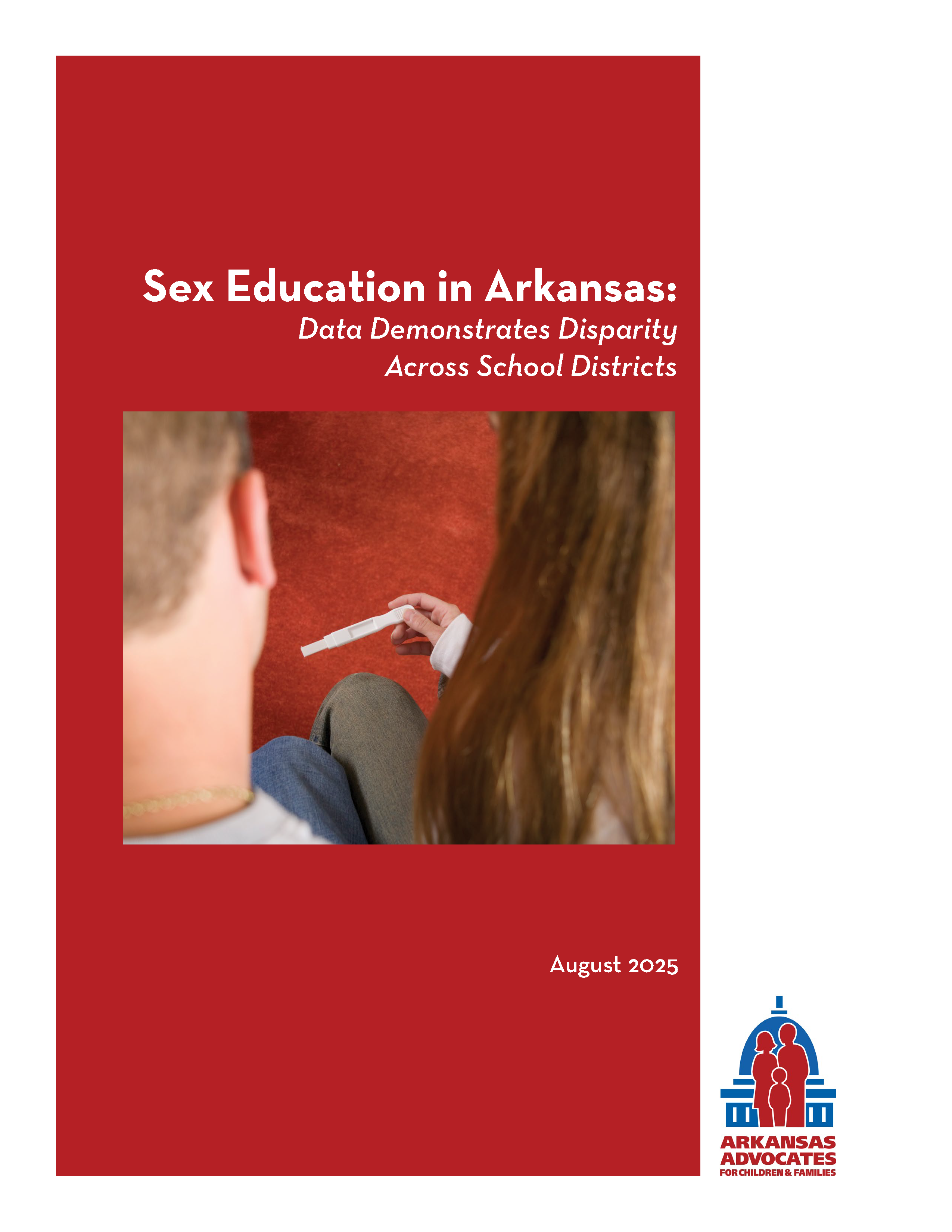
Data Demonstrates Disparity Across School Districts
Despite decades of research showing the significant positive impact of sexual health education on children’s long-term outcomes, Arkansas students still generally have limited access to such programs in school. According to analysis of the results from a recent survey and data request of all the state’s public school districts shows, of those districts that responded, less than one-third offer a moderately or highly comprehensive sex health education.
The state has no requirement that sex health education be offered at all, creating disparities among what students are taught throughout the state. Some students receive scientific and comprehensive instruction while others do not receive information in school to help prevent unwanted pregnancies and sexually transmitted infections. The lack of information contributes to keeping our state’s teen birth rate at or near the highest in the nation.
Over several months in 2024 and 2025, Arkansas Advocates asked every public school district and open enrollment charter school for information on what type of sexual health curriculum they offer, if any. This report is based on the results of that survey and records requested of those 263 districts. The responses results show that most districts (64%) offer some sexual education curriculum. But the curricula include a wide range of offerings, with the majority offering abstinence and healthy relationships while a limited number include information about contraceptives, abuse prevention, and sexual orientation. This report includes information on which districts responded, and for those that completed the survey did, a score based on the information they provided.
This interactive map shows the Comprehensive Sex Education Score (CSE) by school district and the teen birth rate by school district, allowing for a district-level comparison between the two. There is a CSE score for 166 public school districts. The 68 districts without a CSE score are designated in black.
The discrepancy in offerings underscores the need for more comprehensive sexual health education statewide, including the implementation of medically accurate, age-appropriate education across all public schools.
While there are limitations to the research and analysis of the findings, this report is an important first attempt at quantifying the availability and adequacy of sex health education provided to the majority of Arkansas’s students. To address the persistently high teen birth rates and related public health challenges in Arkansas, Arkansas Advocates will continue following the Blueprint for the Future. The Blueprint was the culmination of recommendations from the Sexual Health Education Coalition that was made up of parents, medical professionals, child advocacy centers, and concerned stakeholders. The Coalition was convened by AACF in 2023 and their recommendations contain step-by-step goals for each year until 2031.
Download the report below.