
Children’s Health and Well-Being Need More Support in Arkansas
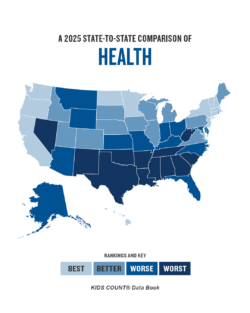
Arkansas ranks 45th in overall child well-being and an alarming 47th in child health outcomes, according to the 2025 KIDS COUNT Data Book, released by the Annie E. Casey Foundation in partnership with Arkansas Advocates for Children and Families. This annual report tracks how children are doing across all 50 states, and the data are clear: Arkansas is not doing enough to support children’s health and well-being.
Let’s take a closer look at the health indicators in this year’s report.
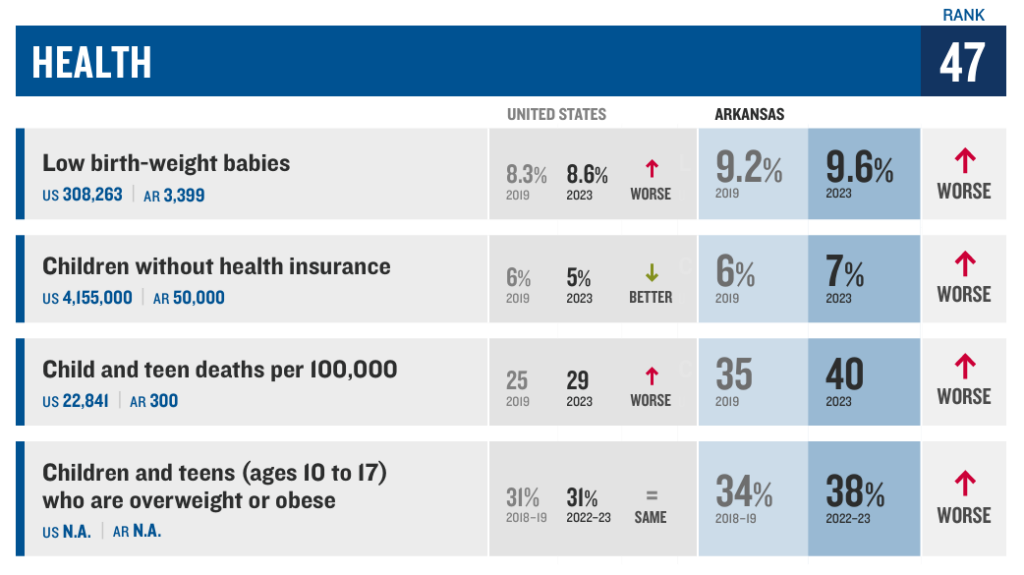
One of the most persistent challenges is the rate of low birth-weight babies. In 2022, more than 3,200 babies in Arkansas—9.3% of all births—were born at a low birth weight. That’s the same as it was in 2019, and it’s worse than the national average of 8.6%. Babies born at a low birth weight are at greater risk for serious health issues, both immediately and later in life. That’s why it’s more important than ever to make investments in maternal and infant health in Arkansas. Our state has taken some important steps by passing the Healthy Moms, Healthy Babies Act, but there is more we can do to change direction. Factors like nutrition access influence birth outcomes, which is why increasing participation in programs like WIC—especially in a state like Arkansas, where too many eligible families aren’t enrolled—should be a high priority.
Health insurance coverage for children is another area where Arkansas is falling behind. In 2022, about 44,000 Arkansas children—around 6%—were uninsured. That rate hasn’t improved since 2019. Most other states have made progress, but Arkansas is slipping in national rankings. Without consistent access to health care, children are more likely to miss out on needed treatment, preventive care, and developmental screenings. Research shows that when parents have coverage, kids are more likely to be covered too—a pattern known as the “welcome mat” effect. These issues will only worsen with the recent passage of the One Big Beautiful Bill Act that cuts federal Medicaid funding. While we will not see the Medicaid cuts until 2026, this law will cost Arkansas billions of dollars over the next decade and threaten the health coverage of thousands of children and families.
One of the most heartbreaking trends in this year’s data is the sharp rise in child and teen deaths. This indicator measures the number of deaths, from all causes, of children between ages 1 and 19 per 100,000 children in this age range. In 2022, Arkansas recorded 325 deaths among children and youth, a rate of 44 deaths per 100,000. That’s a steep jump from 35 per 100,000 in 2019, and far worse than the national rate of 30. While youth mortality rates have increased nationally, Arkansas’s surge is among the worst in the country. Each year, Arkansas’s Infant and Child Death Review Committee looks at the main causes of child deaths (like accidents, suicide, drowning, unsafe sleep practices) and offers ways to help prevent them. Their 2024 report includes steps like improving access to mental health care, encouraging safe gun and medication storage, promoting swimming lessons, increasing seatbelt usage, and sharing safe sleep education with families.
Finally, childhood obesity remains a major public health concern. In 2021–2022, 37% of Arkansas youth aged 10 to 17 were classified as overweight or obese, compared to the national average of 33%. Obesity is linked to poor access to nutritious food, safe places to play, and preventive care. And all these issues are shaped by the communities where children live.
From birth to adolescence, too many Arkansas kids are facing health risks that could be prevented. Whether it’s increasing access to care, investing in maternal and infant health, or strengthening support for healthy communities, we know what works. Arkansas does not have to rank near the bottom. It’s time for state leaders to make children’s health a top priority so that our children can grow up healthy and thrive.