
Arkansas Falls to 48th in Child Health in the 2026 KIDS COUNT Data Book
The 2026 KIDS COUNT Data Book paints a concerning picture of children’s health in Arkansas. This year, Arkansas ranked 48th among states in the health domain, tying the worst health ranking the state has received in the history of the Data Book.
Each year, the Annie E. Casey Foundation’s KIDS COUNT Data Book measures child and family well-being across four domains: economic well-being, education, health, and family and community. Arkansas Advocates for Children and Families serves as Arkansas’s affiliate of the national KIDS COUNT network. The 2026 KIDS COUNT Data Book reflects the most recent available data, from 2024.
Arkansas experienced one of its steepest declines in the health domain this year. The state’s overall health score fell by nearly 100 points to 382 (read about the new scoring here), and its national ranking dropped to 48th. Just five years ago, Arkansas ranked 42nd in child health. The state’s continued decline shows that Arkansas is losing ground compared to other states and moving further away from ensuring all children have the opportunity to grow up healthy.
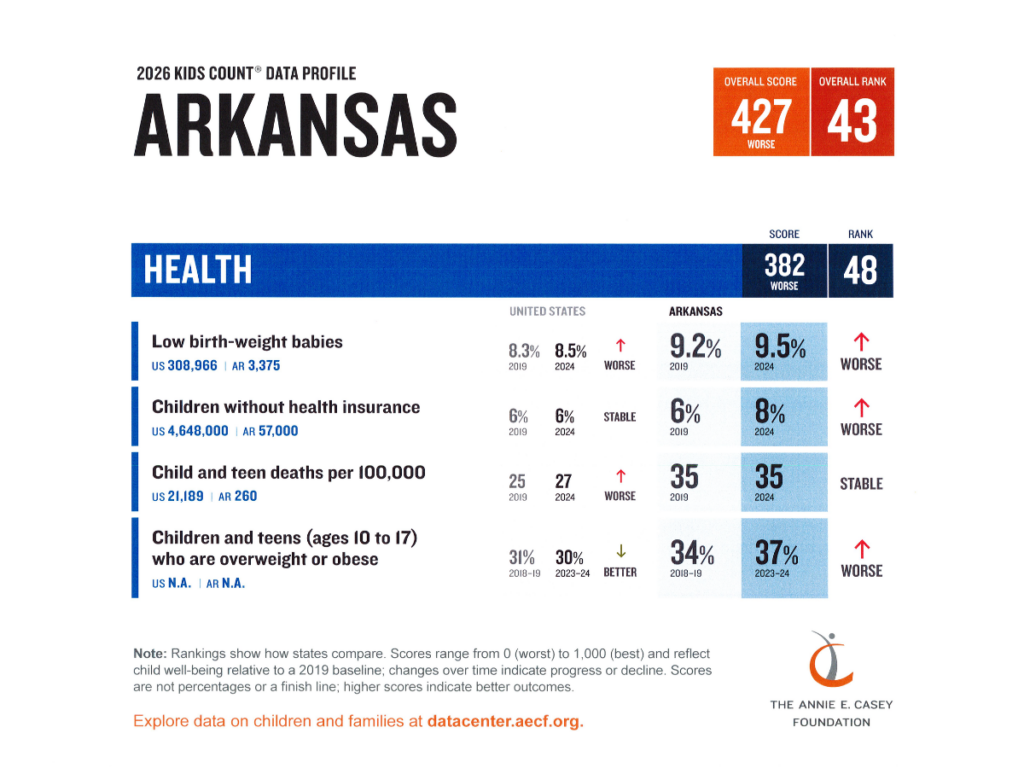
The largest factor driving this decline is the increase in the number of uninsured children. Arkansas’s child uninsurance rate rose from 6% in 2019 to nearly 8% in 2024, a 33% increase. A decade ago, we reached a record low of 4% child uninsurance in 2016, meaning the state’s uninsured rate has doubled since then. As coverage has declined, Arkansas’s ranking on child health insurance coverage has fallen from 29th nationally to 39th. Access to health care is especially important for infants, toddlers, and preschoolers who require frequent visits to the doctor during those early years of life. Unfortunately, new reports like those from the Georgetown Center for Children and Families’ show the uninsured rate rising for young children across the nation.
Other health indicators also moved in the wrong direction in our state. Arkansas saw a 9% increase in the share of children who are overweight or obese, causing its ranking on that measure to fall from 38th to 48th. The percentage of babies born at a low birth weight also increased. While Arkansas’s child and teen death rate remained relatively stable, improvements in other states caused Arkansas’s ranking to slip from 35th to 40th. While other states are moving in the right direction in addressing child and teen deaths, Arkansas stayed the same.
Taken together, three of the four health indicators measured in the Data Book were worse in 2024 than they were in 2019. The state’s declining health indicators should serve as a warning sign that we are not investing enough in the health and well-being of Arkansas’s children.
The increase in uninsured children is especially concerning because it represents a reversal of years of progress. Arkansas has not invested enough in helping families learn about and enroll in programs such as ARKids First. When Arkansas achieved historically low rates of child uninsurance, outreach and enrollment assistance efforts were much stronger at both the state and national levels. Research also shows that children are more likely to be insured when their parents have coverage, making family coverage policies especially important.
Health insurance is the gateway to preventive care, timely treatment, and better health outcomes. Children with health coverage are more likely to receive regular checkups, vaccinations, developmental screenings, and needed medical care. Studies have consistently found that children covered by Medicaid experience better health outcomes, stronger educational attainment, and improved economic outcomes later in life. Coverage also provides families with financial security and protection from medical debt. If Arkansas hopes to improve its standing on children’s health, reducing the number of uninsured children must be a top priority.
Recent federal actions move in the opposite direction. New cuts to Medicaid and changes to eligibility and enrollment requirements from H.R. 1 (also known as the “One Big Beautiful Bill Act”) are expected to make it more difficult for many families to maintain health coverage. While children may remain technically eligible for coverage, research and past experience show that barriers affecting parents often result in eligible children losing coverage as well. As Arkansas already struggles with rising rates of child uninsurance, these changes threaten to make an already concerning trend even worse.
Improving children’s health requires sustained investments in coverage, outreach, preventive care, and maternal and child health programs. The choices policymakers make today will shape whether Arkansas continues to fall behind or begins to reverse course. Ensuring that every child has access to affordable health coverage and care is one of the most important steps Arkansas can take to improve health outcomes and create a stronger future for children and families.