
Arkansas has made modest progress in the economic well-being of children but needs remain
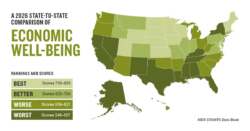
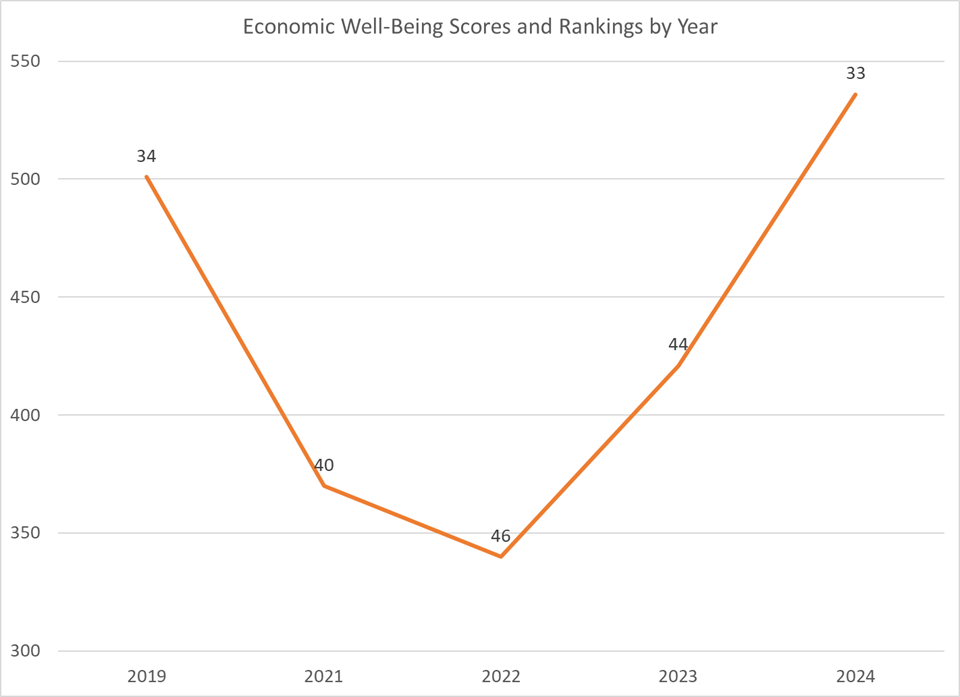
In the 2026 KIDS COUNT Data Book, which is based on the most recent 2024 data, Arkansas ranks 33rd in economic well-being of children among the 50 states. The state is doing a bit better on this domain than it was before the COVID-19 pandemic, as Arkansas ranked 34th based on 2019 data. Still, there is work to be done.
The Data Book is a 50-state report of recent household data developed by the Annie E. Casey Foundation analyzing how children and families are faring. Arkansas Advocates for Children and Families is Arkansas’s member of the national KIDS COUNT network.
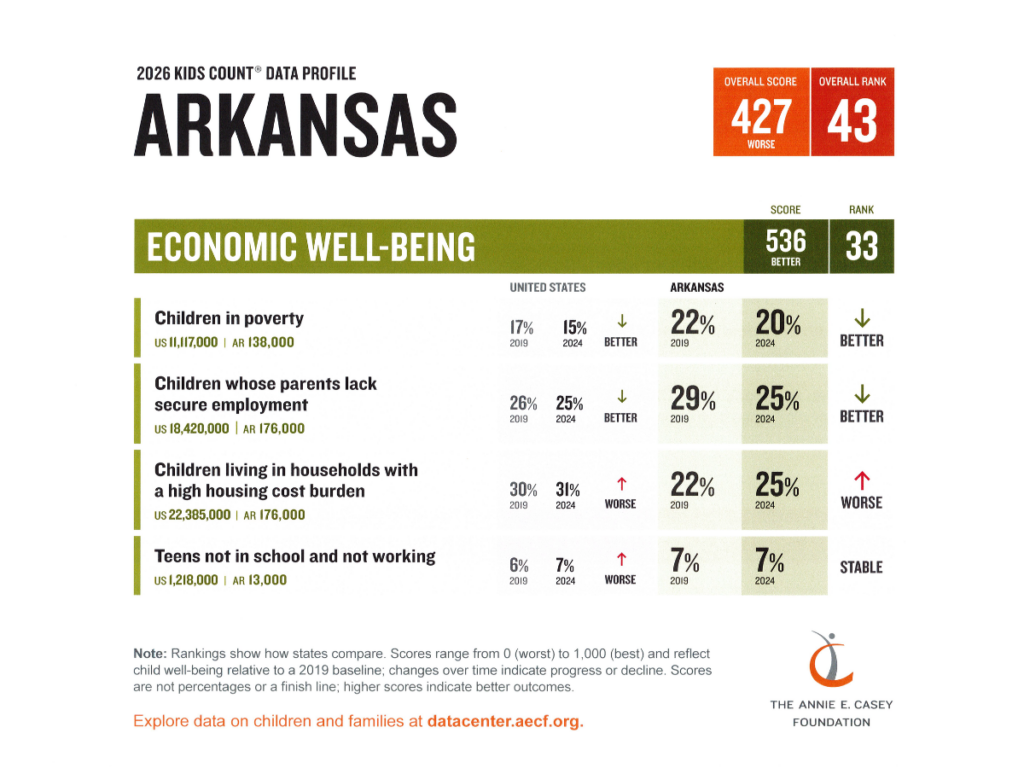
Four different indicators, or variables, contribute to the overall economic well-being domain ranking. Most notable is the number of Arkansas children living in poverty. While 13,000 fewer children are in poverty than just before the pandemic, 20% of our children remain in poverty. That’s one out of every five children for a total of 138,000. While this number represents a 9% reduction since 2019, the overall national reduction was 12%. We lag other states in progress made.
The most worrisome trend is the percent of children living in households with a high housing cost burden (defined as more than 30% of income spent on housing). While the United States witnessed a 3% increase in such households from 2019 to 2024, Arkansas saw a 14% increase over the same period. Now one out of every four children — 176,000 Arkansas kids — live in a high-cost burden household. For this indicator, Arkansas dropped from 9th to 16th. As Arkansas has a relatively low cost of living compared to other states, wages have not kept up with basic needs.
In Arkansas, the number of 16- to 19-year-olds not in school and not working remains unchanged at 7%. This is good news given the United States overall witnessed a 17% increase for this indicator. Also good news is the 14% reduction in the number of children living in a household where no parent has full-time, year-round employment. At the same time the United States overall witnessed only a 4% decrease for this indicator.
With the 2026 KIDS COUNT Data Book, the Annie E. Casey Foundation introduced new methodology that assigns scores alongside the rankings. These scores, on a 0-1,000 point scale, are available for each domain. For economic well-being, Arkansas scores 536 using the latest 2024 data, 35 points better than in 2019. While the chart below demonstrates the dramatic recovery since the pandemic, the state is now only slightly ahead of the pre-pandemic level in score and ranking.
The new scores also allow a visual comparison of Arkansas to other states, including to the best performing states and those with similar scores. In this case, while the Arkansas score is close to that of the United States overall, it is quite a distance from Minnesota and New Hampshire.

The data for the this year’s Data Book is the latest available, from 2024. This version of the Data Book does not capture recent federal policy changes that continue to reduce the number of Arkansans participating in Medicaid and the Supplemental Nutrition Assistance Program (SNAP), and which will increase the number of children living in poverty. Nor does this Data Book capture the high rate of inflation over the past year, making it harder for Arkansas families to afford basic needs.
While we should pause and celebrate the progress made in the economic well-being domain, there are too many Arkansas children living in poverty and too many families struggling to pay for everyday expenses. The state should consider actions to help children and families thrive, especially affordable housing policies. Investments in early childhood education; economic and workforce development; family economic supports such as child and earned income tax credits; and programs to minimize the detrimental effects of benefit cliffs are all proven policies to lift children out of poverty. If the state were to improve 10% in the KIDS COUNT Data Book economic well-being indicators, 14,000 fewer Arkansas kids would live in poverty. If we were to perform as well as New Hampshire, 90,000 less kids would live in poverty. As we all care about children, these are worthwhile goals, indeed.