Introduction
The arrival of a new child or the serious illness of a family member requires time off to care for that loved one. But this can be quite challenging for most Arkansas workers. That’s because neither the U.S. government nor the state of Arkansas require paid time off for such important family needs. In fact, only 1 in 4 American workers have access to paid family leave through their employers. And the federal Family Medical Leave Act (FMLA), which gives eligible workers up to 12 weeks of unpaid, job-protected leave per year for specific family and medical reasons, is unavailable to 44% of the workforce.1 This is because they work for an employer with less than 50 employees, have not accrued 1,250 hours of work during the previous 12 months, or have been employed less than 12 months.2 Even those who are eligible for FMLA often cannot afford to take weeks of leave without pay.3 Therefore, many Arkansas families facing important life events often find themselves choosing between providing care for a family member and a critical paycheck.
Paid Family and Medical Leave (PFML) laws and policies remedy this untenable situation. And while there is no federal comprehensive PFML law, 14 states and the District of Columbia have PFML policies. These jurisdictions understand that the returns on comprehensive PFML far exceed the cost of the investment.
First, PFML helps people care for themselves and their loved ones without risking financial ruin. Without paid leave, many workers must choose between their paycheck and engaging with their family responsibilities or recovering from a serious illness. Second, research consistently finds that PFML is associated with better outcomes for parents and children. Parents have more time to bond with newborns, establish healthy routines, and attend medical appointments.4 Third, PFML keeps people attached to the workforce; studies show workers who have access to paid leave are more likely to return to their previous employer rather than permanently exiting the labor force. This helps preserve careers, earnings, and valuable skills.5 Fourth, PFML benefits employers, especially small businesses; evidence from states with paid leave programs suggests employers generally do not experience major negative effects on profitability or productivity, while many benefit from improved retention and employee morale.6 And fifth, PFML reduces poverty. Access to paid leave is often lowest among lower-wage workers, even though they are the least able to absorb lost income. Paid leave policies reduce poverty by providing income support during periods when workers need time away from work.7
Paid family and medical leave enables people to handle major family and health challenges without losing their jobs or income. Rather than being solely an individual benefit, PFML is an investment in workers, families, communities, and the economy. Arkansas will assert competitive advantage and take care of working families as it expands access to paid leave.
Focus Group Methodology
At the end of 2025 and the beginning of 2026, Arkansas Advocates for Children and Families (AACF) held five focus groups around the state to gather Arkansans’ views, perspectives, and experiences with PFML. Three of these were in person, taking place in Fayetteville, Texarkana, and Helena-West Helena. Two were online, one targeting teachers and the other nurses. AACF partners and trusted community members helped recruit participants. All participants completed an informed consent document. A total of 35 Arkansans participated across the focus groups.
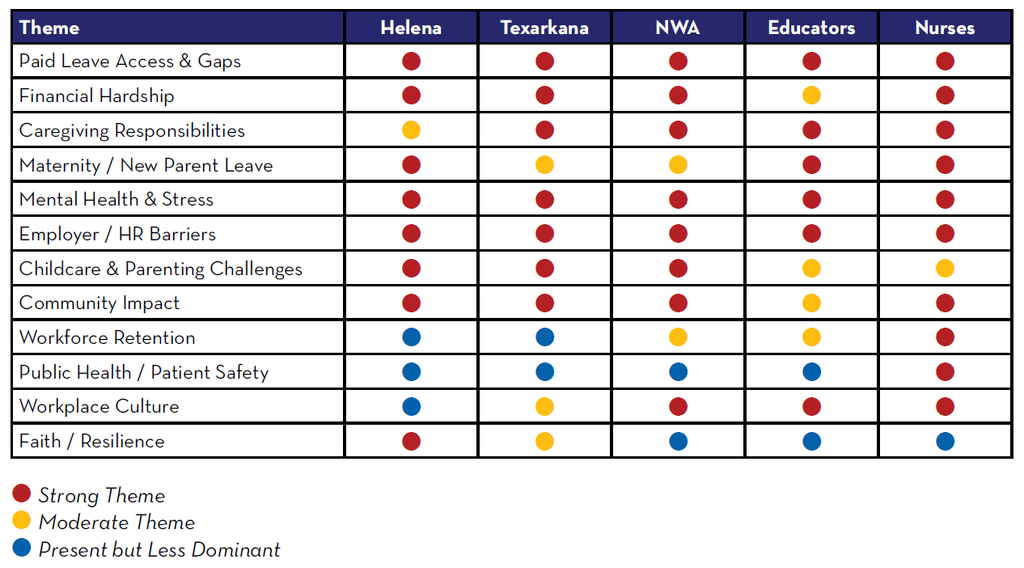
An AACF facilitator followed a “roundtable discussion guide” (see Appendix) to ensure each group discussed the same topics. The focus group sessions were recorded, and transcripts were generated. AACF staff also kept detailed notes on each meeting. A list of reoccurring themes was identified for each session, and theme frequency tables were generated. The overlapping themes from all five sessions were used to condense the findings. Representative quotes from the individual participants nuance the themes, and a heat map demonstrates reoccurring discussions. Distinctive ideas and perceptions from each focus group were also identified. Finally, policy recommendations generated by the participants were summarized.
Overarching Findings Across All Five Focus Groups
Paid Leave Is Viewed as a Necessity, not a Luxury
Participants overwhelmingly viewed paid family and medical leave as a basic support that families need during major life events, rather than an optional workplace benefit. Across all groups, participants described leave as essential for childbirth, caregiving, illness, recovery, and family stability. However, participants consistently described limited or nonexistent access to paid leave. Many relied on unpaid leave through FMLA, unemployment, short-term disability, or personal savings. They also described unsafe childcare arrangements, reliance on older siblings, and dangerous situations caused by a lack of provided leave.
Maternity leave, Neonatal Intensive Care Unit experiences, infant bonding, breastfeeding, foster care placement, and adoption-related leave emerged as major discussion points. Participants frequently described returning to work before they felt physically or emotionally ready. Choosing between caring for loved ones and paying bills emerged as the most common theme.
Representative quotes:
“If you didn’t have paid time, you had to put your baby in daycare at one month old.”
“People can’t support each other when they’re barely surviving.”
“A young mom is now in jail because she had to go to work and left the kids with an older sibling.”
Caregiving Responsibilities Extend Far Beyond Childbirth
Although parental — maternity and paternity — leave were important topics, participants consistently emphasized other caregiving responsibilities.
Paid leave must address the realities of long-term caregiving across the lifespan, not just childbirth:
- Aging parents
- Spouses with serious illness
- Children with disabilities
- Children requiring surgeries or specialty care
- Grandparents
- End-of-life care
- Mental health crises
One of the strongest cross-site findings is that PFML is fundamentally a caregiving policy, not simply a parental leave policy. Participants described caring for sick children, spouses undergoing chemotherapy, parents with cancer, and children with brain tumors. Many participants noted that they were the primary caregivers responsible for navigating medical appointments, surgeries, and long-term health conditions.
Representative quotes:
“My mother had a stroke… we’ve spent a lot of money on caregivers, and it’s been incredibly financially taxing.”
“My son had to have multiple surgeries… I was still having a hard time making ends meet because I wasn’t getting paid.”
“I worked 40 hours in three days so I could take four days off to see my mom.”
Financial Hardship Is the Most Universal Consequence
Participants discussed the financial strain of unpaid caregiving, including paying for outside caregivers, reducing work hours, losing benefits, delaying retirement plans, and making difficult employment decisions. Several caregivers reported feeling forced to choose between income and family obligations. Participants shared stories of relying on family and friends, unemployment insurance and other public assistance programs, community support organizations, and churches.
Participants described:
- Losing income during leave
- Falling behind on bills
- Utility shutoffs
- Housing insecurity
- Needing family financial support
- Delaying medical care
- Returning to work before complete recovery
- Using all available Personal Time Off (PTO) and sick leave
Across all groups, economic vulnerability was the strongest practical argument for paid leave, as financial stress compounds caregiving challenges and frequently creates longterm economic consequences for families.
Representative quotes:
“I could not afford not to work, and I could not afford not to emotionally care for my husband.”
“I’ve absolutely not gotten medical procedures I needed because I couldn’t afford the time off work.”
“It’s a domino effect… you could lose your home.”
“I had no income… if it wasn’t for my husband, I don’t know what I would’ve done.”
Mental Health Effects Are Significant
Mental health concerns appeared in every discussion. Paid leave is essential for emotional well-being and healthy parentchild bonding. But it’s also important for other forms of care, both for self and family members.
Participants described:
- Postpartum depression
- Burnout
- Emotional exhaustion
- Grief
- Anxiety
- Stress
- Guilt
- Compassion fatigue
- Mental health breakdowns
Further, participants repeatedly linked paid leave to:
- Emotional recovery
- Reduced stress
- Improved parenting
- Better caregiving
- Stronger family relationships
Representative quotes:
“You’re not even able to parent with your best self because you’re stressing about how you’re going to survive.”
“I was probably the meanest mom I’ve ever been… I just couldn’t function.”
“You love your baby, but you’re depressed… you don’t even want to pick the baby up.”
“I was better, but I was not healed when I came back to work.”
Workplace Policies Often Make Problems Worse
Participants repeatedly noted that leave policies often require workers to exhaust PTO, vacation time, and sick leave before accessing any protections. All participants viewed this as fundamentally different from true paid family and medical leave.
Across all groups, participants described:
- Employer retaliation
- Pressure to return early
- Complicated leave procedures
- HR barriers
- Inconsistent policies
- Fear of job loss
- Confusing rules
- Excessive paperwork
Many workers reported that leave existed on paper but was difficult to access in practice. Further, participants described employer retaliation, pressure to return early, misinformation from human resources, and reduced hours after returning from leave.
Representative quotes:
“They make the deadlines so hard to follow… you basically can’t complete all the paperwork.”
“They told me I couldn’t take the day off, even though I had the time.”
“It’s dehumanizing… you feel like a number on a spreadsheet.”
“I had to quit my job, or they would replace me while I was gone.”
“She gave me only two days [of work] when I came back… just because I didn’t come back when she told me.”
Paid Leave Is Viewed as a Community Investment
Paid leave is not just a workplace benefit. Every focus group expanded the discussion beyond individual workers. For example, participants connected unpaid leave to homelessness, bullying, hunger, and instability in schools.
They further connected paid leave to:
- Child well-being
- Educational success
- Family stability
- Workforce retention
- Community health
- Crime reduction
- Elder care
- Economic security
The dominant narrative across all sites was that paid leave benefits entire communities, not just individual employees. Paid leave is viewed as an equity issue that affects geographic, economic, and occupational disparities.
Representative quotes:
“Kids come to school hungry, dirty, and bullied because utilities were shut off.”
“People would be more happy… crime would go down… people could pay their bills.”
“Your staff will be happy [with a PFML policy]… they’ll want to work for you.”
“The health of our community is dependent on the health of our healthcare workers and families.”
What Was Unique About Each Focus Group?
Helena-West Helena: Faith, Resilience, and Postpartum Recovery
The Helena-West Helena group was more personal and emotionally driven than the others.
Unique themes included:
- Faith as a coping mechanism
- Reliance on informal support networks
- Strong emphasis on resilience
- Postpartum depression experiences
- Personal stories of overcoming hardship without institutional support
The most distinctive message for this group: When formal support systems fail — those provided by employers or government — families rely on faith, family, and persistence to survive. Helena-West Helena participants often framed leave as a matter of dignity and survival rather than policy design; they described their experiences through resilience and community care. Strong cultural values help families cope in the absence of policy support.
Texarkana: Child Well-Being and Community Instability
Texarkana participants drew the strongest connection between paid leave and children’s outcomes.
Reoccurring topics included:
- Utility shutoffs
- Housing instability
- School impacts
- Child hunger
- Child neglect concerns
- Unsafe childcare arrangements
- Homelessness and family crises
Participants emphasized that low-income and service-industry workers are the least likely to have paid leave, leaving them the most vulnerable to eviction, hunger, and utility shutoffs. Educators, school staff, and community service organizations witness the downstream effects on children, such as hunger, bullying, and instability. The consequences of unpaid leave show up in schools.
Fayetteville: HR Barriers and Workplace Culture
The Fayetteville group focused more heavily on workplace systems than any of the other groups.
Themes included:
- Administrative hurdles
- HR complexity
- Workplace culture
- Corporate employment models
- Immigrant worker experiences
- Employer loyalty and retention
Attendees felt that accessing leave can be almost as difficult as not having leave at all. They frequently discussed bureaucracy, confusing deadlines, paperwork requirements, and institutional barriers. They also emphasized the importance of supportive workplace culture, loyalty, and the disconnect between corporate messaging and lived experience. Participants stressed that supportive leave policies improve retention and morale. One participant put it this way: “If you take care of me, I want to take care of you.”
TeachPlus Educators: Teacher Guilt and Student Responsibility Participants, primarily Arkansas educators and education professionals, discussed their experiences within the education system. Participants repeatedly described situations where they delayed medical care, returned to work too early, exhausted accumulated leave, or experienced significant stress while caring for children, parents, or spouses. The educator focus group introduced a theme that appeared nowhere else: teacher guilt. Participants repeatedly described: • Feeling responsible for students while on leave • Anxiety about lesson plans • Concerns about substitute quality • Returning before ready because students “needed them” • Balancing caregiving and educational responsibilities Teachers often felt guilty taking leave even when leave was available. Unlike other groups that focused mostly on employers, teachers focused heavily on students and the impact of teacher absence on learning. Participants praised Arkansas’s recently enacted paid maternity leave policy for public school employees but criticized the absence of paid paternity leave and the policy’s limited scope. Several educators described carefully timing pregnancies to take advantage of winter and summer breaks, returning to work sooner than desired, or relying on accumulated sick leave.
Nurses: Healthcare Workforce Sustainability
Focus group participants included nurses working in hospitals, inpatient behavioral health settings, maternal-child health, and healthcare administration. Like with other focus groups, discussion revealed distinct themes around caregiving responsibilities, workforce retention, mental health, workplace culture, family caregiving, and the unique challenges workers face when balancing their professional duties with their own family needs.
However, the healthcare professionals frequently linked paid leave not only to family well-being but also to healthcare system effectiveness, patient safety, nurse retention, and public health outcomes. Nurses repeatedly described situations where they delayed medical treatment, worked while ill, returned to work before recovery, exhausted all available leave, or left bedside care entirely because of family caregiving obligations.
As healthcare workplace culture often prioritizes staffing needs over worker health and recovery, participants argued that stronger leave protections would improve employee wellbeing, reduce turnover, strengthen patient care, and support healthier communities.
Topics that framed paid leave as a healthcare system issue:
- Nurse shortages
- Patient safety
- Burnout
- Mental health crises
- Staff retention
- Working while sick
- Nurse-to-patient ratios
- Healthcare workforce sustainability
Participants emphasized the healthcare system cannot stay healthy if healthcare workers are not healthy. The nurses repeatedly argued that paid leave is not just good for workers and families; it is necessary for patient outcomes and the stability of Arkansas’s healthcare workforce.
Focus Groups: Bringing it Together
Across five focus groups with participants representing urban and rural communities, educators, healthcare workers, parents, and caregivers, the findings were strikingly consistent: Arkansans overwhelmingly view paid family and medical leave as a tool that promotes family stability, financial security, mental health, workforce retention, and community well-being. The differences between groups were not about whether paid leave matters. Rather, each group illuminated a different consequence of its absence as described above.
The focus groups painted a powerful picture that paid family and medical leave is not simply a workplace benefit. Participants consistently described it as an economic policy, a caregiving policy, a health policy, a workforce policy, and ultimately a community-strengthening policy.
A cross-site heat map demonstrates the prevalence of reoccurring themes:
Recurring Themes in Focus Groups
Focus Group Recommendations and Best Practices
Participant Recommendations
One of the strongest findings from the five focus groups is that participants were not simply asking for “more time off.” They were consistently describing specific gaps in the current system and, often indirectly, proposing solutions. Across all five groups, a clear policy agenda emerged, including 10 policy recommendations.
Create a Statewide Paid Family and Medical Leave Program
This was the most consistent recommendation across all groups. Participants emphasized that leave should not depend on where someone works, whether they are a teacher or nurse, or whether their employer voluntarily offers a benefit. They suggested a statewide PFML program should provide wage replacement for the birth of a child, adoption, foster placement, care of a seriously ill family member, recovery from a worker’s own serious health condition, and mental health conditions requiring leave.
Expand Leave Beyond Maternity Leave
The educator and nurse groups repeatedly highlighted that childbirth is only one reason people need leave. In addition to the coverage list above, participants frequently discussed specific needs, such as stroke recovery of parents and cancer treatment. The focus groups suggested that a policy narrowly focused on maternity leave would miss many of the situations creating the greatest hardship. Specifically, participants would like policy to cover care for parents, spouses, domestic partners, children, grandparents, and other family members involving caregiving relationships.
Include Fathers, Adoptive Parents, Foster Parents, and Other Kinship Caregivers
Participants repeatedly argued that fathers need bonding time; adoptive parents have the same caregiving needs as biological parents; and foster placements often require immediate, intensive involvement. Several participants expressed frustration that existing policies do not treat these families equally.
Replace Income, Not Paid Time Off (PTO)
One of the clearest findings from participants was that using PTO is not the same thing as paid leave. Many participants described exhausting vacation leave, sick leave, and personal leave to care for family members. It is especially important for employees to reserve their paid sick days for when they are contagiously sick to help reduce spread of illness in the workplace. The recommendation that PFML exist separately from PTO was particularly strong in the nurse focus group.
Ensure Job Protection Starts Immediately
Several participants lost protection simply because they changed employers, had not worked for their employer long enough, and did not qualify for FMLA. Focus groups suggested a PFML policy should have lower eligibility thresholds, portable benefits, coverage for newer workers, and broader inclusion than the federal FMLA.
Protect Health Insurance During Leave
This issue surfaced repeatedly but is often absent from policy discussions. Participants worried about premium payments, insurance continuation, and medical coverage while on leave, as a period of serious illness is precisely when losing coverage is most harmful. PFML should include continued health insurance coverage throughout approved leave periods.
Simplify the Application Process
All focus groups discussed challenging bureaucracy, including complex paperwork, multiple approvals, doctor certification expenses, confusing rules, and administrative delays. Several participants felt the process itself discouraged leave use. Therefore, a successful program should be easy to understand, online accessible, available in multiple languages, supported by clear guidance, and minimally burdensome.
Explicitly Cover Mental Health Needs
Mental health concerns also emerged in every focus group. Many described returning to work before recovery because they could not afford longer leave. Therefore, mental health conditions should qualify under the same standards as physical health conditions. Strong precedent for this is provided by the FMLA.8
Include Special Considerations for Rural Arkansas
Focus group participants frequently described long travel times to specialists, limited local care options, trips to Arkansas Children’s Hospital in Little Rock, and repeated provider appointments away from home. Rural workers often need more flexibility simply because healthcare access requires more time. Any PFML policy should recognize ongoing treatment requirements, the need for intermittent leave, and travel-related caregiving burdens.
Frame PFML as Workforce Infrastructure
A most powerful argument, particularly from educators and nurses, extends beyond the individual and the family. Participants repeatedly linked paid leave to increased employee retention, reduced burnout, enhanced recruitment, deeper morale, higher workforce participation, reduced employer costs, and greater productivity.
To summarize, each focus group was asked what they would say to Arkansas state policymakers. Distilled into a single policy statement, participants suggested:
Arkansas workers should not have to choose between caring for themselves or a loved one and maintaining financial stability. A statewide Paid Family and Medical Leave program should provide accessible, job-protected, wage-replacement leave for caregiving, childbirth, adoption, foster placement, serious illness, and mental health needs while preserving health insurance and minimizing administrative barriers. Such a policy would strengthen families, improve workforce retention, support child development, enhance public health, and promote stronger communities across Arkansas.
The Essential Components of a Comprehensive Paid Family and Medical Leave Policy
The recommendations advanced by the Arkansas focus group participants parallel the national conversation on best practices for PFML. To date, 14 states and the District of Columbia have enacted policies to provide comprehensive paid family and medical leave. Experiences in these states suggest several key components. According to A Better Balance, the essential components include:9
- Coverage: An effective and comprehensive PFML policy covers all employees (including public and private sector, part-time, and self-employed workers).
- Purpose: A strong PFML policy covers workers’ serious health needs, caring for the serious health needs of a family member, bonding with a new child, and addressing the impacts of military deployment or sexual/domestic violence.
- Family: The definition of family is inclusive to reflect the reality of modern families (and typically includes parents, spouses and domestic partners, children of all ages, grandparents, parents-in-law, and siblings).
- Number of Weeks: A strong PFML policy provides at least 12 weeks of leave for all covered purposes.
- Wage Replacement: An effective PFML policy provides a wage replacement rate high enough to ensure all workers can afford to take the leave they need (with special consideration for low-income workers who need much of their income to pay bills).
- Eligibility: As many workers as possible should be eligible for benefits, including new workers and those who have recently changed employment.
- Employment Protections: A PFML policy must ensure all workers have the right to return to work following leave and will not be punished or fired for taking leave.
Paying for a Comprehensive Paid Family and Medical Leave Policy
For the states that currently have PFML laws, they are typically funded one of three ways: employee-funded, employer-funded, or shared employee and employer funded. Newer programs are more likely to rely on the latter. The contribution is typically well under 1% of wages, but varies from state to state, with states periodically adjusting rates based on claims and experience.
Contributions are typically collected each pay period, and flow into a state-managed insurance fund. When an employee takes qualified leave, the state pays the employee a full or prorated wage replacement according to the PFML policy.
Arkansas Cities Lead the Way
While the state of Arkansas does not have a PFML law, the cities of Little Rock and Fayetteville recently enacted Paid Family and Medical Leave policies for their employees.
In March 2026, the city of Little Rock announced a new paid parental leave policy in addition to its existing PTO policy. The new policy allows up to 12 weeks of paid parental leave for those with at least one continuous year of service and 1,250 hours worked in the prior 12 months (thereby covering some part-time employees). Employees with less than one year of service can receive up to six weeks of paid leave. Qualifying events include birth of a child, adoption, foster care placement, surrogacy, and pregnancy loss. The city also has an Employee Assistance Program — at no cost to employees — that provides mental health services.10
In July 2026, the city of Fayetteville announced its own parental leave policy. The city now provides up to six weeks of fully paid leave following the birth, adoption, or foster placement of a child. The benefit only covers full-time employees at this point. Employees must reach 12 months of continuous service to access the full benefit. However, employees with less than a year of tenure are offered prorated paid time off. The program explicitly extends to individuals in formal domestic partnerships.12
In both cases, the costs are covered by existing municipal budgets. Neither city will increase taxes or raise additional revenue to pay for parental paid leave.
Moving Forward: Potential Policies for the State of Arkansas
A long-term goal is a comprehensive Paid Family and Medical Leave policy for all Arkansas workers, as PFML benefits employees, employers, families, communities, and the economy. Advocates and policymakers should now focus on expanding PFML benefits using a targeted, strategic approach. Ideally, an increasing number of Arkansans will be covered by PFML over the next few years through incremental changes, eventually resulting in a state-wide, comprehensive policy. There are many possible and viable policies that should be considered by the Arkansas legislature and governor in 2027.
Expansion of Public School Maternity Leave to Cover Fathers
House Bill 1017 of the 2025 General Assembly Regular Session, now Act 904,12 provides up to 12 weeks of paid maternity leave for eligible employees of Arkansas public school districts and open-enrollment charter schools. Leave is for the birth of a biological child, adoption of a child under age 1, and foster placement of an infant under age 1. The employee must have at least one year of service. Further, the Arkansas Division of Elementary and Secondary Education must cover the approved maternity-leave costs. However, Act 904 clearly states that the benefit is only available to females.
As there are important benefits for children, families, and employers, paid leave for birth, adoption, and foster care should be extended to new fathers (fathers also benefit greatly from access to paid parental leave). In Arkansas public education, approximately 32% of all staff are male.13
Expansion of State-Employee Maternity Leave
The state of Arkansas established its first paid maternity leave in 2017. This initial law allowed for up to four weeks of paid leave for birth or adoption. In 2023, through Act 770,14 paid maternity leave was expanded to 12 weeks. In addition, foster placement for a child under 1 year of age was also added to qualifying events. However, just as with public school employee paid maternity leave, Act 770 states that only females are covered by the policy.
The current maternity leave law should be expanded in two important ways to help Arkansas state employees and their families. First, the current maternity leave program should be expanded to cover new fathers. Second, state employees should be provided paid leave to care for the serious health needs of a loved one. While 12 weeks of paid leave at 100% of wage replacement is ideal, this could be adjusted. One important consideration is the sustainability of the state employee catastrophic leave bank, which is used to fund the current maternity leave policy. When maternity leave was expanded in 2023, the bank had more than 1.6 million hours of leave.15 Payroll deductions or general revenue expenditures could also be considered for future paid family and medical leave coverage.
It is important to note that state agencies have already budgeted for each employee’s full salary for the year, so the actual paid leave does not create an additional cost. Any additional cost would come from needing to hire a temporary replacement while the person is on leave; and depending on the job and department, this is not always necessary.
Coverage for All Foster Care Placements and Adopted Children
Acts 904 and 770 limit paid leave for foster care placement and adoption to children under the age of 1. Ideally, there would be no age limit for such major family transitions, as parent-child bonding is important regardless of age. Further, such family changes often come with increased resource needs, making it difficult for new parents to forgo a paycheck. One possible policy change is to increase the age limit to 6 years of age now and continue to increase the age limit over time.
As with expansion of public school and state employee maternity leave to include fathers, the increased adoption and foster care leave coverage could be included in current paid leave systems: the Division of Elementary and Secondary Education budget and catastrophic leave bank respectively.
Paid Leave for the Early Childhood Education Workforce
Like other states, Arkansas is suffering from a childcare crisis. One of the challenges for early childcare providers is recruitment and retention of employees. While taking care of young, developing children is important, it is also demanding work. Providers may find it difficult to increase workforce salaries given affordability challenges. Paid family leave access would benefit employees, providers, and the children and families they serve. Paid leave would allow these essential caregivers to take care of their own children as they take care of others’.
The state of Arkansas can explore the expansion of paid parental leave for public school employees to include the early education workforce. This would likely require additional funding.
Paid Leave for Parents with Children in Neonatal Intensive Care
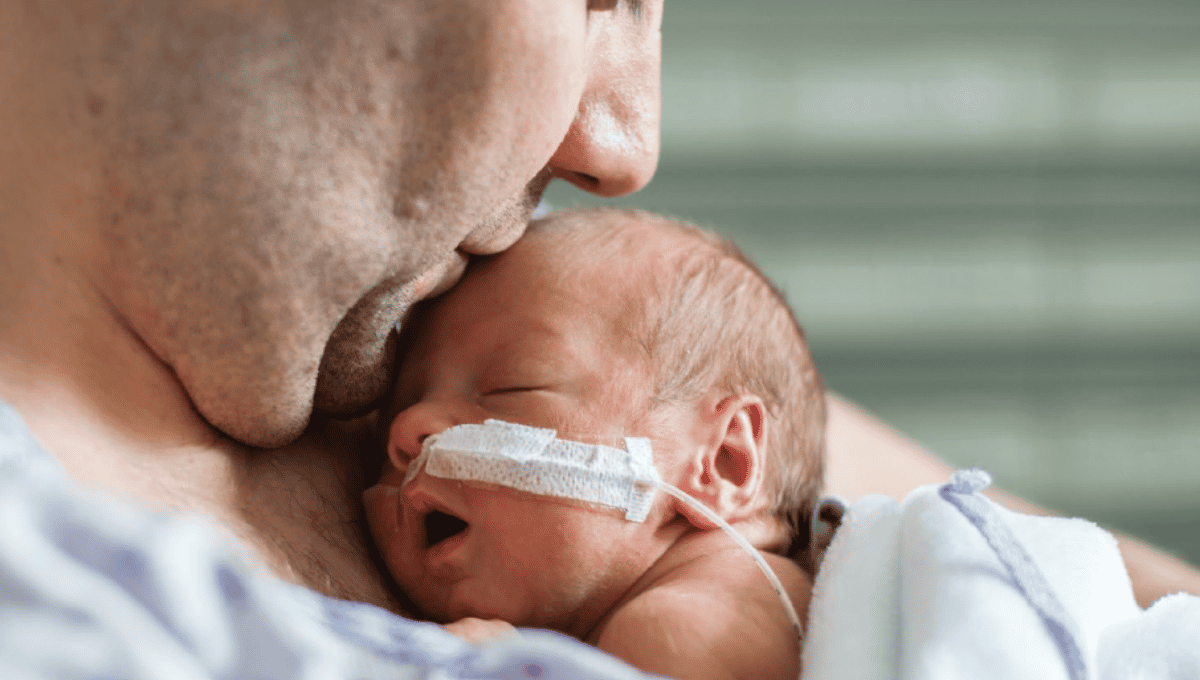
Neonatal Intensive Care Unit (NICU) leave is a rapidly emerging policy area. NICU parents face unique challenges. Premature or medically fragile infants may spend weeks or months in the hospital. Parents often continue working during the NICU stay to preserve leave for after discharge. However, many families burn through their leave before they ever bring the baby home. At the same time there is compelling evidence that NICU babies do better when parents are involved and present often. Frequent contact, holding, and skin-to-skin care help infants gain weight faster, stabilize their breathing, lower infection risks, and show better early brain and nervous system development.16 NICU parents should not have to choose between spending time with their infant and earning a paycheck.
A NICU paid leave policy should provide parents with up to 12 weeks of paid leave at 100% of wage replacement (since everyday expenses increase for parents spending time in the NICU). The benefit could be provided to state and public school employees through expansion of current leave policies.
To extend paid NICU leave to all qualifying parents in Arkansas, including those in the nonprofit and private sectors, the catastrophic leave bank model will not work. Instead, the state would need to develop a NICU leave insurance program. This program could be funded by a combination of employee and employer paid premiums. These would be much less than 0.5% of wages for both contributors, as states with comprehensive Paid Family and Medical Leave insurance programs — covering many types of leave — typically require less than 1% of wages total. Further, small businesses could be asked to contribute less.
Safe Leave: Addressing the Impacts of Domestic or Sexual Violence
At least 27 states plus the District of Columbia provide some form of explicit leave protection related to domestic or sexual violence, whether through paid sick leave, paid family and medical leave, victim leave laws, or dedicated safe leave statutes. These laws and policies often permit leave for medical care, counseling, relocation, obtaining protective orders, legal proceedings, or safety planning. While not all states require paid safe leave, many do. The leave is usually required of employers or is paid for through a larger PFML insurance program.
Paid safe leave matters because time off that is not paid is often not truly accessible to the workers who need it most. But paid safe leave is better for everyone. First, survivors often face immediate financial pressure through unexpected expenses such as emergency housing or relocation, transportation, childcare, medical treatment, counseling, and legal fees. Second, paid leave increases the likelihood that leave will actually be used, which in turn leads to better outcomes for victims. Third, safety often requires multiple appointments and court visits, such as obtaining a protective order, meeting with law enforcement, and attending court hearings. Perhaps most importantly, job loss can trap people in dangerous situations, as financial dependence is one of the most cited barriers to leaving an abusive relationship. Finally, employers benefit as well, as paid safe leave helps employers retain experienced workers and avoid the costs associated with recruiting and training replacements.
Arkansas does not have a state-wide policy related to recovery from domestic or sexual violence. This could easily be added to current paid leave policies for state and public school employees. For the former, the paid leave could be financed through the catastrophic leave bank. The Arkansas Division of Elementary and Secondary Education could fund the latter.
Providing paid coverage for all employees would require an employer-financed or leave insurance program as described above.
Military Exigency and Caregiver Leave
Many states allow paid leave for military family needs, usually called military exigency leave or military family leave (also covered by the FMLA17).These benefits generally provide wage replacement when a worker needs time off because a family member is deployed, called to active duty, injured during service, or requires caregiving. Exigency leave may typically be used for legal and financial arrangements, childcare changes, military ceremonies and events, counseling, and pre- and post-deployment activities. Military caregiver leave applies when a service member or veteran has a serious injury, a serious illness, or a rehabilitation need.
States that provide paid military leave usually do so through an existing comprehensive PFML law. The state of Arkansas could create a standalone military exigency and caregiver leave law. As with safe leave, such a policy could be funded by employers or through a state leave insurance program.
Acknowledgements
A special thank you to all the individuals who gave their valuable time during the focus group settings. Participants shared deeply moving and personal experiences to advance the dialogue on the importance of paid family and medical leave. Their openness, honesty, and vulnerability are greatly appreciated. Any expansions of PFML laws and policies in the state will be in no small measure due to them.
Thank you to the community organizations who recruited participants to the focus groups. This includes Circles Northwest Arkansas, Ground Floor Collective, Legacy Birthing Project, and Teach Plus Arkansas. They ensured a diversity of participant perspectives and experiences.
Thank you to colleagues at A Better Balance and the Economic Policy Institute’s EARN in the South Working Group on Paid Leave. Their insights, knowledge, and expertise are invaluable to AACF’s work in this policy arena. And their review of this document resulted in a much stronger report. Their dedication to paid leave in their communities is truly inspiring.
And finally, thanks to the Annie E. Casey Foundation for funding this work through its State Children and Youth Policy Fund. AACF appreciates the Foundation’s dedication to improving the lives of Arkansas’s children and their families.
Endnotes
1. A Better Balance, “At a Glance: The Family and Medical Insurance Leave Act,” https://www.abetterbalance.org/resources/at-a-glance-the-family-and-medical-insurance-leave-act/
2. U.S. Department of Labor, “Family and Medical Leave Act,” https://www.dol.gov/agencies/whd/fmla
3. National Partnership for Women and Families, “Key Facts: The Family and Medical Leave Act,” https://nationalpartnership.org/report/fmla-key-facts/
4. Annual Review of Public Health, “The Impacts of Paid Family and Medical Leave on Worker Health, Family Well-Being, and Employer Outcomes,” https://pubmed.ncbi.nlm.nih.gov/36332659/
5. United States Congress, Joint Economic Committee, “The Economic Benefits of Paid Leave: Fact Sheet,” https://www.jec.senate.gov/public/_cache/files/646d2340-dcd4-4614-ada9-be5b1c3f445c/jec-fact-sheet—economic-benefits-of-paid-leave.pdf
6. Annual Review of Public Health, “The Impacts of Paid Family and Medical Leave on Worker Health, Family Well-Being, and Employer Outcomes,” https://pubmed.ncbi.nlm.nih.gov/36332659/
7. U.S. Department of Labor, “US Department of Labor Announces New Research that Underscores Benefits of Paid Family and Medical Leave,” https://www.dol.gov/newsroom/releases/wb/wb20241121
8. U.S. Department of Labor, “Fact Sheet # 28O: Mental Health Conditions and the FMLA,” https://www.dol.gov/agencies/whd/fact-sheets/28o-mental-health
9. A Better Balance, “Key Components: The Essential Elements of a Strong Paid Family and Medical Leave Law,” https://www.abetterbalance.org/resources/key-components-the-essential-elements-of-strong-paid-family-and-medical-leave-law/
10. City of Little Rock, “Little Rock Implements Paid Parental Leave Policy,” https://littlerock.gov/little-rock-implements-paid-parental-leave-policy/
11. KUAF Public Radio, “Fayetteville Launches Paid Parental Leave for City Employees,” https://www.kuaf.com/show/ozarks-at-large/2026-07-07/fayetteville-launches-paid-parental-leave-for-city-employees
12. State of Arkansas, 95th General Assembly, Regular Session 2025, Act 904, https://arkleg.state.ar.us/Home/FTPDocument?path=%2FACTS%2F2025R%2FPublic%2FACT904.pdf
13. Arkansas Department of Education Data Center, “State Profile,” https://adedata.arkansas.gov/statewide/ReportList/State/StateProfile.aspx
14. State of Arkansas, 94th General Assembly, Regular Session 2023, Act 770, https://arkleg.state.ar.us/Home/FTPDocument?path=%2FACTS%2F2023R%2FPublic%2FACT770.pdf
15. KUAR Public Radio, “Arkansas Governor Signs Maternity Leave Bill for State Employees,” https://www.ualrpublicradio.org/local-regional-news/2023-04-24/arkansas-governor-signs-maternity-leave-bill-for-state-employees
16. Early Human Development, “Parent Participation in the Neonatal Intensive Care Unit: Predictors and Relationships to Neurobehavior and Developmental Outcomes,” https://pmc.ncbi.nlm.nih.gov/articles/PMC5856604/
17. U.S. Department of Labor, “Fact Sheet #28M: Using FMLA Leave Because of a Family Member’s Military Service,” https://www.dol.gov/agencies/whd/fact-sheets/28m-fmla-military-family
Appendix
Roundtable Discussion Guide: Paid Family and Medical Leave (PFML)