New “Public Charge” Rule Likely to Harm Children, Increase Hunger
We should all want children of immigrants to meet their full potential. It’s good for Arkansas, from the strength of our economy to our education system and community health overall.

We should all want children of immigrants to meet their full potential. It’s good for Arkansas, from the strength of our economy to our education system and community health overall.

Note: Since this blog was originally published on October 28, the Trump administration announced on November 3, 2025, that it will comply with federal court orders and begin using contingency funds to partially pay November SNAP benefits as the...

Arkansas has the highest hunger rate in the nation. We know this because our federal government measures it — officially referred to as food insecurity — and publishes the results each year. With this data, we’re able to compare...
While we have frequently highlighted how the One Big Beautiful Bill Act slashes funding for health care and food assistance, another provision of the One Big Beautiful Bill Act stands to harm public education: the creation of the federal...

The impact of the “One Big Beautiful Bill Act” will be enormous and wide-reaching in Arkansas. Our higher poverty rates mean cuts to health care coverage and food assistance will sharply increase hardship across the state. The legislation, which...
The United States House of Representatives today passed the Senate’s version of the reconciliation bill that will worsen hunger and strip health care coverage from millions of families. The bill now goes to President Donald Trump to be signed...

Any claim that the reconciliation bill benefits all Arkansans is an exaggeration at best.
We need our Congressional delegation to stand up for Arkansas and reject this reckless plan that will devastate our fellow Arkansans.
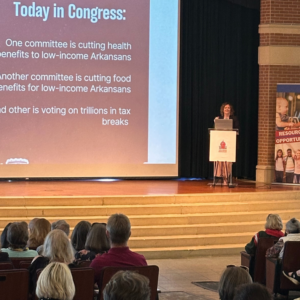
AACF held town halls in each of Arkansas's four Congressional Districts.
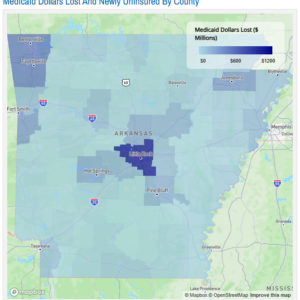
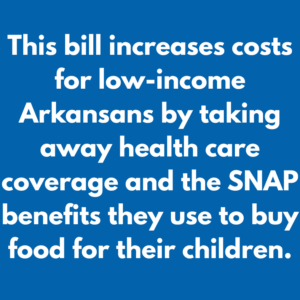
As many as 177,000 Arkansans could lose health coverage if the bill passes. And almost 60,000 residents are at risk of losing food assistance.