
Percent of Arkansas Children Living in Poverty Decreases, But These Gains Are Threatened
On September 15, known among anti-poverty advocates and policy researchers as “Poverty Day,” the U.S. Census Bureau released official poverty numbers from its Current Population Survey. The most current results involving children, for both the country and Arkansas, are somewhat mixed.
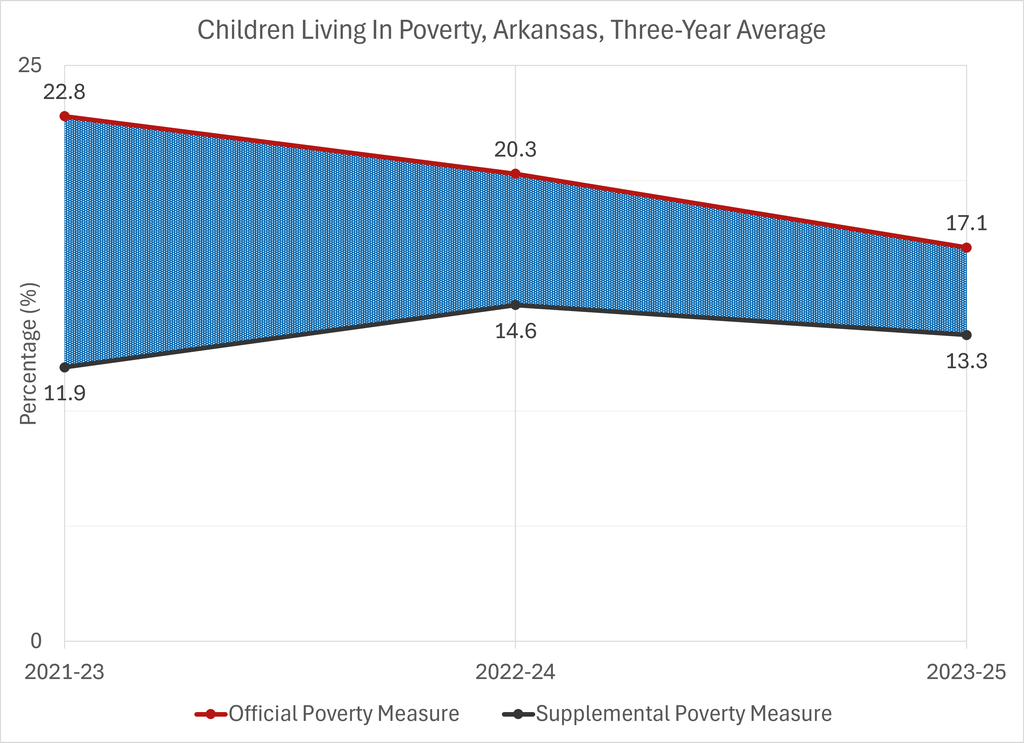
For the nation, the Official Poverty Measure (OPM) for children — those under 18 years of age — saw a slight decrease, from 14.8% to 14.3%. While Arkansas has higher poverty than the country, the state saw larger percent declines; poverty for children decreased from 20.3% to 17.1%.[1] These reductions are positive results for Arkansas.
However, the OPM presents an incomplete picture of poverty in the United States, as it provides an outdated method for calculating what a family needs to survive, and is set at the same level across the Lower 48 states (even though the cost of living varies considerably). The Supplemental Poverty Measure (SPM) is a more accurate gauge of families’ economic situations as it accounts for essential expenses such as housing, medical, and childcare; adjusts for rising costs and geographic differences in the cost of living; and measures the effectiveness of vital resources like tax credits, Social Security, Supplemental Security Income, food assistance, and housing subsidies.
In the nation, the SPM for children unfortunately increased, from 13.1% to 13.5%. More good news for our state: the Arkansas childhood SPM decreased from 14.6% to 13.3%, after having increased dramatically the year before.
At this moment, using the SPM three-year averages, Arkansas is doing better than the national average. What explains this? The answer is hidden in the difference between the OPM and the SPM. Yes, Arkansas is a lower-resourced state, with many families making less than the national median household income. But this in turn means that many Arkansas families qualify for federal programs, such as federal tax credits, food assistance, and housing vouchers. The shaded region in the chart below demonstrates just how many Arkansas children — by percentage — are lifted out of poverty thanks to federal essential needs programs.
But any progress we’ve made on childhood poverty in Arkansas is under threat by federal changes, specifically those enacted by the Reconciliation Act, H.R. 1 (also known as the “One Big Beautiful Bill Act”). The number of Arkansas children receiving food assistance from the Supplemental Nutrition Assistance Program (SNAP) has decreased by more than 11% since September 2025, shortly after H.R. 1 became law. SNAP losses in Arkansas are expected to reach $1.5 billion over 10 years. And soon, the state will have to contribute up to an additional $75 million annually to keep SNAP serving our food-insecure neighbors.
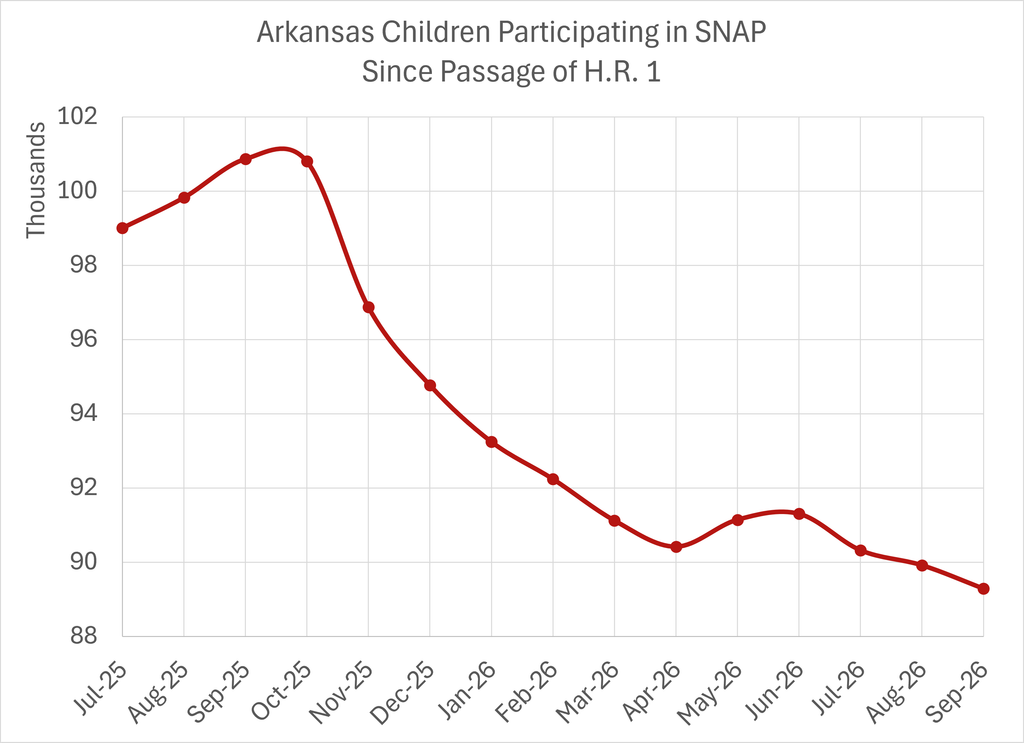
Federal Medicaid is also affected by H.R. 1. As of October 1, many groups who previously received health coverage through Medicaid are no longer eligible, including refugees and asylees who are in our state legally. Work-reporting requirements for Medicaid expansion adults begin in 2027. All while the uninsured rate for Arkansas children is on the rise. In total, the Medicaid changes are expected to cost the state over $11 billion over 10 years. It will take some time for the detrimental effects of H.R. 1 to show up in the OPM and SPM, but we can expect childhood poverty to increase in Arkansas. At the end of the day, data points and charts are just numbers. It is important to recognize there are real, hungry kids in all communities in the state, as well as those who lack access to healthcare. Our federal and state policies should prioritize these children and not make life harder for them.
[1] Because the sample size for the Current Population Survey Annual Social and Economic Supplement is relatively small, state data are reported as a three-year average (2023-2025). To be consistent, national numbers presented here are also the three-year average.